
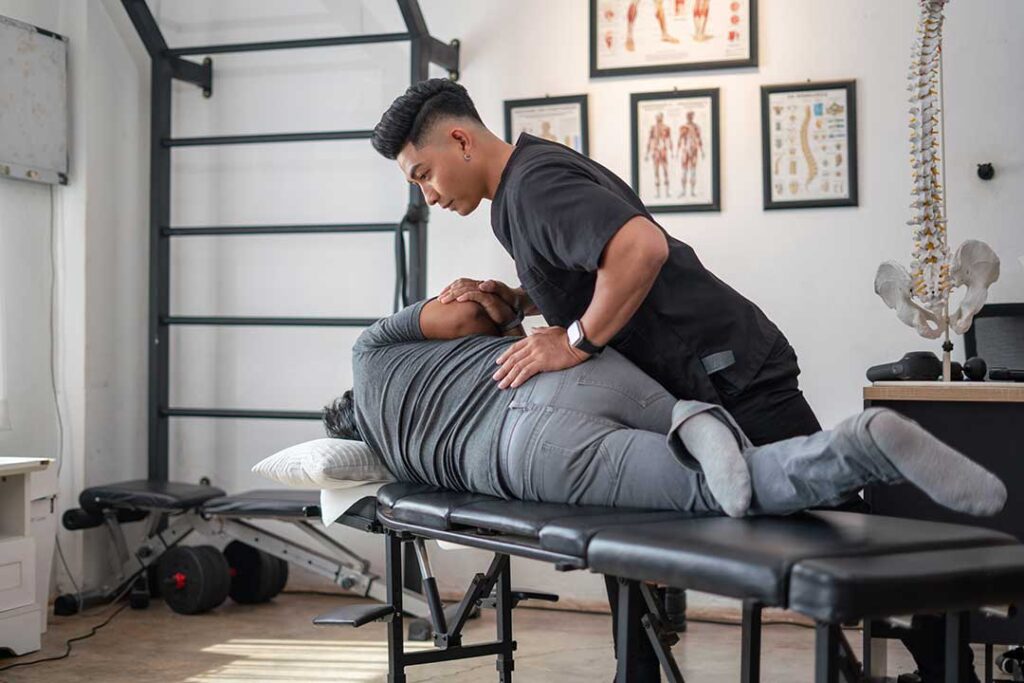
People in Glen Cove, NY often compare chiropractic care and massage therapy when dealing with back pain, neck tension, headaches, stiffness, or activity-related soreness. Although both approaches may involve hands-on treatment, they are not the same. They differ in purpose, training, techniques, and the types of problems they are designed to address.
Understanding those differences can make it easier to choose an appropriate starting point and recognize when hands-on care may not be enough.
What is the main difference between chiropractic care and massage therapy?
Chiropractic care primarily evaluates and treats problems involving the spine, joints, movement, and the nervous system. Massage therapy focuses mainly on muscles, connective tissue, circulation, and patterns of soft-tissue tension.
A chiropractor may use spinal manipulation, mobilization, movement assessment, stretching, and exercise guidance. A massage therapist may use techniques such as kneading, compression, gliding strokes, trigger-point work, or myofascial methods.
The distinction is not absolute. Chiropractors may address muscles and soft tissues, while massage therapists may work around joints and movement restrictions. The difference is the central focus of each profession.
How does chiropractic treatment work?
Chiropractic treatment begins with an assessment of symptoms, movement, posture, medical history, and physical findings. The goal is to identify factors that may be contributing to discomfort or reduced function.
Treatment may include:
- Spinal or joint manipulation
- Gentle joint mobilization
- Stretching and range-of-motion exercises
- Strengthening or stability exercises
- Advice about lifting, sitting, sleep positions, or daily movement
- Soft-tissue techniques when muscle tension is part of the problem
Spinal manipulation uses a controlled force to move a joint. Some people notice a temporary popping sound, but the sound itself is not the measure of whether treatment was useful. Many chiropractic techniques do not involve a forceful thrust or audible release.
Chiropractic care may be considered for certain types of low back pain, neck pain, joint stiffness, or movement limitations. It should be adapted to the individual, especially for people with osteoporosis, recent fractures, inflammatory conditions, neurological symptoms, or a history of spinal surgery.
How does massage therapy work?
Massage therapy is designed to affect muscles and other soft tissues. Pressure and movement are applied to areas of tension, soreness, restricted motion, or general discomfort.
Common approaches include:
- Swedish massage, which generally uses flowing strokes and moderate pressure
- Deep-tissue techniques, which use slower or firmer pressure on selected areas
- Sports or activity-focused massage
- Myofascial techniques directed toward connective tissue
- Trigger-point work for localized muscle tenderness
Massage may help some people feel less muscle tightness, improve short-term comfort, or relax after physical or mental stress. It can be especially appealing when symptoms feel muscular, such as tight shoulders after prolonged computer use or sore legs after increased activity.
Massage does not generally diagnose spinal joint conditions, nerve compression, fractures, or internal medical problems. Persistent or unexplained symptoms may require a broader medical evaluation.
Which option is better for back or neck pain?
Neither approach is automatically better for every type of back or neck pain. The more suitable option depends on the likely source of the symptoms, their severity, how long they have lasted, and whether warning signs are present.
Massage may be reasonable when discomfort appears related to muscle overuse, stress, prolonged sitting, or general tightness. Chiropractic assessment may be more relevant when the main concern involves restricted joint movement, recurring mechanical pain, or difficulty with certain motions.

Some people use both approaches at different times. For example, a person with recurring low back discomfort may benefit from exercise and movement education, while massage may help manage muscle tightness that develops around the painful area. Combining services should not replace a clear diagnosis or coordinated care when symptoms are persistent.
Can either treatment help with headaches?
Some headaches are associated with neck muscle tension or restricted movement in the upper back and neck. In those cases, massage or carefully selected manual therapy may provide short-term relief for some individuals.
However, not every headache comes from the neck. Migraine, infection, medication effects, vision problems, high blood pressure, and neurological conditions can also cause head pain.
Urgent medical evaluation is appropriate for a sudden, severe headache; a headache after a head injury; or head pain accompanied by weakness, confusion, fainting, speech changes, fever, or vision loss. Hands-on treatment should not be used to delay evaluation of these symptoms.
What does treatment usually feel like?
Massage pressure can range from light to firm. Some mild tenderness afterward may occur, particularly after deeper work, but severe pain during treatment is not a sign of better results. Communication about pressure, discomfort, and sensitive areas is essential.
Chiropractic treatment can involve gentle positioning, stretching, pressure, or a brief controlled movement of a joint. Temporary soreness can occur after some techniques. A person should report increasing pain, new numbness, weakness, dizziness, or other unusual symptoms.
Treatment should be adjusted for age, health history, medications, pregnancy, recent surgery, and current activity level. A technique that is suitable for one person may be inappropriate for another.
What are common misconceptions?
One misconception is that chiropractic care is limited to spinal adjustments. In practice, care may also include exercise, mobility work, ergonomic guidance, and advice about activity modification.
Another misconception is that massage therapy is only for relaxation. Massage can be used for specific muscle complaints, although its effects may be temporary and it is not a substitute for diagnosing medical conditions.
It is also inaccurate to assume that more force produces better results. Effective care should be appropriate to the person’s condition and tolerance. Repeated treatment without improvement deserves reassessment rather than simply increasing intensity or frequency.
Are there reasons to avoid hands-on treatment?
Certain symptoms require medical evaluation before massage or chiropractic treatment. These may include unexplained weight loss, fever, a history of cancer, significant trauma, progressive weakness, loss of bladder or bowel control, severe nighttime pain, or numbness in the groin area.
People taking blood thinners, living with bleeding disorders, managing advanced osteoporosis, or recovering from surgery should disclose that information before treatment. Skin infections, open wounds, acute fractures, and some vascular conditions may also make massage inappropriate in an affected area.
Seasonal habits in the community can influence symptoms. Cold weather may lead to less outdoor movement, while snow clearing, home maintenance, commuting, and prolonged indoor sitting can place extra strain on the back and shoulders. Sudden increases in activity after a period of inactivity are common sources of muscle soreness and joint irritation.
How should a person decide?
A useful first question is whether the problem feels primarily muscular or whether it involves joint movement, recurring mechanical pain, or functional limitations. Symptoms that are mild, familiar, and improving may respond to activity modification, gradual movement, sleep adjustments, or conservative hands-on care.
Symptoms that persist, worsen, repeatedly return, or interfere with walking, work, sleep, or daily tasks deserve a more complete assessment. The most appropriate care may involve a chiropractor, massage therapist, primary care clinician, physical therapist, or another health professional depending on the findings.
The central difference is simple: massage therapy mainly addresses soft-tissue tension and comfort, while chiropractic care focuses more broadly on spinal and joint function, movement, and related neuromusculoskeletal concerns. Neither approach is right for every condition, and both are safest when treatment matches the actual cause of the symptoms.
